Author name: Enthusiast

T-shirt “Brushes” for Shellac and Oil Finishes
Finishing pad with oil 2

Every successful project should culminate at the finish line. And in the case of our seventh, eigth and ninth grade classes the finish (line) is made mainly of shellac. I like to use shellac because it is very forgiving for students’ mistakes. It dries fast and its components are mostly (if not totally) natural. To apply shellac successfully I came up with this protocol. Our shellac is kept in a […]

The post T-shirt “Brushes” for Shellac and Oil Finishes appeared first on Popular Woodworking Magazine.

T-shirt “Brushes” for Shellac and Oil Finishes Read More »
Finish for Wooden Pens

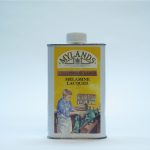
Mylands Melamine Lacquer. This is an older label

I got a question about finishes for turned wooden pens. Full disclosure: I’ve never turned a pen. Nor have I turned a bowl. My experience with the lathe has been turning parts for furniture I’m restoring. But I know a bit about finishes, so I think I can answer the question. The pen turner said he didn’t like using cyanoacrylate (CA) glue because it made the wood look too much […]

The post Finish for Wooden Pens appeared first on Popular Woodworking Magazine.

Finish for Wooden Pens Read More »

Making a Workbench – Part 3: PVA Glue

Squaring a Frame

In the third part of this workbench build I get around to gluing up the leg frames. I thought I’d take a moment to mention a couple of details about this phase of the project. Throughout this build I’ve been using bog standard PVA (polyvinyl acetate) wood glue. I’ve always gotten along really well with PVA glue, I know it’s limits, know the timbers that don’t react to well to it […]

The post Making a Workbench – Part 3: PVA Glue appeared first on Popular Woodworking Magazine.

Making a Workbench – Part 3: PVA Glue Read More »

2016 PWM Excellence Awards – 8 Days & Counting

Screen Shot 2016-06-09 at 11.47.57 AM

Have you entered you best work(s) yet in the 2016 PWM Excellence Awards? There are but eight days left to do so (the submission period closes at 11:59:59 p.m. EDT on June 17), then we’ll collect reader votes June 20-24. The grand-prize winner gets a check for US$1,000, the winner in each of the five categories, and the overall Readers’ Choice winner, get a gift certificate to ShopWoodworking.com – plus, […]

The post 2016 PWM Excellence Awards – 8 Days & Counting appeared first on Popular Woodworking Magazine.

2016 PWM Excellence Awards – 8 Days & Counting Read More »

How to Make an Unusable Wood Coffee Mug

Making a Wooden Coffee Mug

I got this beautiful chunk of walnut from my step dad. He cut down an old walnut tree from my childhood home an it’s been air drying for a few years now. I wanted to make the entire coffee mug out of one piece of walnut but the slab I had wasn’t tall enough so I ended up adding the maple bottom as you see here.

Food Safe Finish

When I started this wood coffee mug project I fully intended to use it as a real coffee mug. I coated the inside with a white Smooth-On plastic resin. When most resins and finishes completely cure after a few weeks they are food safe. Even if they don’t claim to be food safe. Your dining room table for instance probably has a polyurethane finish on it. Polyurethane isn’t promoted as food safe but once fully cured after a few weeks it’s safe enough to eat off of. I thought the white plastic resin I used would be perfect but it turns out that it gets soft when exposed to heat which is definitely not food safe. In my research I was able to find a few different “food safe” labeled epoxies but none of them mentioned they can be used for hot liquids. I’m sure there is something out there that can be used but I was unable to find it. If you know of anything that’s food safe for hot liquids please let me know in the comments down below. I may try and find a stainless steel insert and attempt this project again.

Thanks for stopping by! Be safe. Be passionate and Make Something!

Tools and Supplies Used

how to make a wood coffee mug

how to make a wood coffee mug

How to Make an Unusable Wood Coffee Mug Read More »

Design Brief No. 5: The Danish Campaign Chest

angled-legs

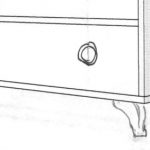
When you set out to design a piece of furniture, don’t be surprised if you end up designing four or five pieces in the same vein. With this campaign chest, I ended up with three separate designs: A Baltic birch plywood version with round stainless steel pulls and a base that uses 4” casters. A more Japanese/Chinese version with recessed round pulls (shown in the previous entry) and sled feet […]

The post Design Brief No. 5: The Danish Campaign Chest appeared first on Popular Woodworking Magazine.

Design Brief No. 5: The Danish Campaign Chest Read More »

Scroll to Top